
by Imani Speaks | Oct 26, 2025 | Uncategorized
When Love Feels Overcrowded: Healing the Ancestral Baggage in Relationships
They say that in love there are three beings — the two people ‘in love’ and God. On the good days, this triangle creates balance, grace, and a sense of divine partnership. The relationship feels aligned, supported, and sacred. But when challenges arise and triggers get pressed, that peaceful trio suddenly becomes a crowded room. Out come the ancestral wounds, the childhood defenses, and the unhealed stories that each partner unknowingly carries.
The relationship begins to feel like a family reunion of ghosts. You might find yourself reacting in ways that feel too intense for the situation — withdrawing, over-explaining, becoming controlling, or shutting down. What’s happening isn’t just about the moment; it’s about memory. Our emotional DNA has been quietly shaped by generations before us, and whether we like it or not, that inheritance often shows up most clearly in the intimacy of love.
When the Past Sleeps in the Present Bed
Every couple starts off believing that their relationship is a fresh beginning — a clean slate written in love. Yet the moment intimacy deepens, old imprints begin to stir. One person might fear abandonment because somewhere in their lineage, love was always tied to loss. Another might fear vulnerability because their ancestors had to be strong to survive. These patterns are invisible, but powerful.
Psychologists call this intergenerational transmission of trauma, but spiritually speaking, it’s the soul’s curriculum. Our ancestors’ unresolved emotions don’t disappear; they echo through our nervous systems, family stories, and emotional reflexes. If left unexamined, they can shape the way we give and receive love — not from conscious choice, but from inherited pain.
This is why sometimes love that is pure in intention can still feel heavy in practice. You’re not just navigating the relationship between two people; you’re also carrying the unfinished healing of generations who came before you.
The Ego and the Soul: Two Different GPS Systems
When we get triggered, it’s the ego that jumps to the wheel. The ego is not evil; it’s protective. It learned long ago that love could be risky. So it guards the heart through control, withdrawal, or judgment. The problem is, the ego aligns naturally with the baggage — it works to defend the wound rather than heal it.
The soul, on the other hand, has a different agenda. It’s not interested in being right; it’s interested in being free. It calls us toward forgiveness, compassion, and growth — not as a performance, but as a deep remembering of who we really are.
So, when conflict arises in love, we’re essentially being asked a spiritual question:
Will I let my ego align with my pain, or will I align with my soul’s evolution?
This is where relationships become sacred classrooms. Every misunderstanding is an invitation to rise higher than the old programming — to pause before reacting, to listen instead of defend, and to feel rather than flee.
Ancestral Healing in Real Life
Let’s bring this down to earth. Imagine a couple, Maya and James. Maya gets anxious whenever James goes quiet during conflict. She interprets his silence as rejection. For her, emotional distance feels unsafe. She starts to pursue — calling, texting, trying to “fix it.” James, on the other hand, grew up in a home where arguments were explosive, so he learned to shut down to stay safe. When Maya presses, he retreats even further.
On the surface, it looks like a communication issue. But beneath it lies a deeper story. Maya’s grandmother was abandoned by her husband; emotional closeness, for her family line, always carried the fear of loss. James’s lineage was built on emotional survival — showing feelings was dangerous. Both are unconsciously loyal to their ancestral patterns.
The moment they begin to recognize that these reactions didn’t start with them, compassion enters. Instead of blaming each other, they can see the bigger tapestry. Healing begins when awareness replaces accusation.
Healing the Lineage: The Inner Work
Ancestral healing doesn’t necessarily mean you need to research every branch of your family tree. It means noticing the emotional patterns that repeat — scarcity, control, silence, guilt, shame, people-pleasing, emotional withdrawal — and deciding to stop passing them forward.
Here are a few ways to start:
- Witness Your Triggers Without Judgment
Every trigger is a teacher. When something in your partner’s behavior feels too much, pause. Ask, “Is this about the present moment, or am I reliving something older?” The goal isn’t to stop feeling — it’s to bring consciousness to the feeling so that it no longer runs the show.
- Dialogue with Compassion, Not Defense
In moments of tension, the ego wants to win. The soul wants to understand. Replace “You always…” with “When this happens, I feel…” That small shift can transform confrontation into connection.
- Honor the Ancestors — and Evolve Beyond Them
Speak gratitude for the strength they gave you, even if their pain shaped you harshly. You can say aloud: “I thank you for what you endured, but I now choose peace instead of pain.” This creates energetic permission to live differently.
- Therapeutic and Spiritual Tools
Journaling, breathwork, energy clearing, family constellations, or therapy can help to identify and release inherited emotional patterns. Sometimes what feels “personal” is actually collective — you’re simply the one chosen to break the cycle.
- Re-align the Ego with the Soul
Meditation and self-inquiry help soften the ego’s grip. Ask yourself, “What would love do now?” That question bypasses the mind and activates the higher self that sees beyond the drama.
Why Love Needs Healing Energy, Not Perfection
Love isn’t meant to be a performance of perfection; it’s a process of purification. Every argument, every misunderstanding, every emotional storm carries within it a coded opportunity for healing. When you see your partner’s wound not as an attack but as an echo of pain, compassion can flow.
Healing the ancestral line is not about blaming those who came before us. They did the best they could with the awareness they had. Our generation’s job is simply to do better — to bring light where there was once shadow, to give voice to what was once silenced.
In doing so, love becomes something sacred again. It stops being just romance and becomes spiritual practice — a mirror that shows us both our unhealed parts and our divine potential.
From Overcrowded to Aligned
When the ego aligns with the baggage, love feels crowded. But when the ego aligns with the soul, love feels clear. The same two people, the same God, but now in harmony. The relationship transforms from a battlefield into a sanctuary — a space where both can grow, not just as lovers, but as healers of their own lineage.
Remember: you are not just in a relationship with your partner; you are in relationship with the energy of your ancestors, your beliefs, and your evolving soul. The more you cleanse what you carry, the lighter love becomes.
In that way, every couple who chooses consciousness is doing holy work. You are not only building a healthy relationship — you are rewriting history, healing the past, and creating a legacy of love that future generations will inherit in their own emotional DNA.
So, the next time love feels hard, pause and ask yourself:
Is this me, my partner, or my lineage speaking?
Then breathe, invite God back into the conversation, and remember — healing is not a destination. It’s a devotion.
by Imani Speaks | Oct 16, 2025 | Emotional Healing, Health & Well Being (The Physical), ✨The Mental Wellbeing Realm
? A Tool for Weight Loss, Health & Emotional Balance
Personal Note:
When I first bought my vibration plate, I’ll admit, it sat in the corner collecting dust. I wasn’t sure if it would really make a difference. But once I started using it consistently — even just 10 minutes a day — I noticed something remarkable. Not only was I toning up and improving circulation, but I also began feeling calmer, less tense, and more balanced emotionally. The more I used it, the more it became a small but powerful part of my wellness routine.
1️⃣ How It Works
The vibration plate delivers rapid, controlled oscillations that cause your muscles to contract and relax multiple times per second. In just 10–15 minutes, you can engage your entire body — activating deep muscle fibers that are often missed in traditional exercise.
Key benefits include:
- Improved muscle tone and metabolism
- Better lymphatic drainage (reduces bloating and fluid retention)
- Enhanced circulation and oxygen delivery
- Increased bone density (vital for women over 50)
- Better balance and coordination
This makes it an ideal low-impact exercise tool, especially if you’re managing joint stiffness or limited time for full workouts.
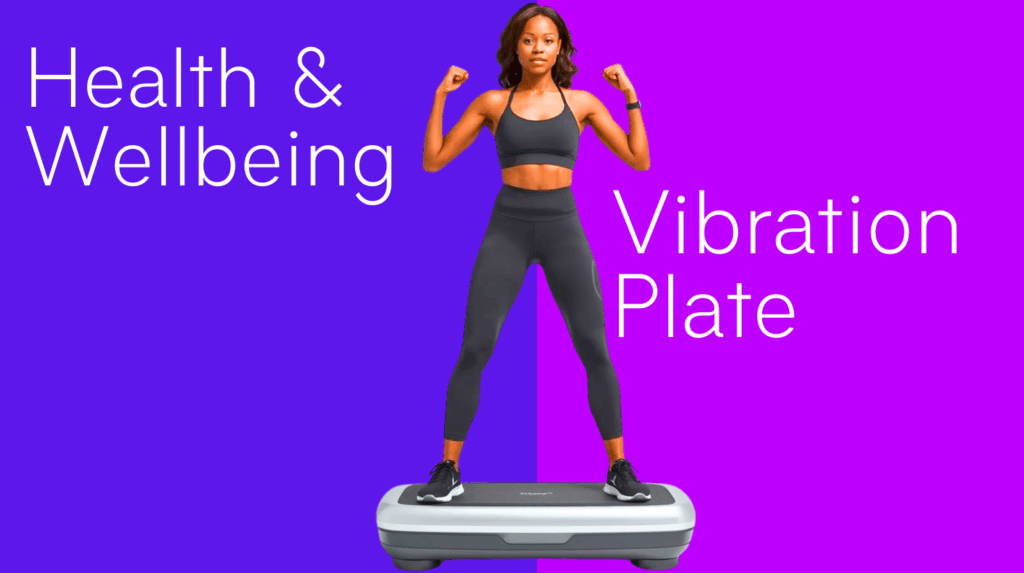
vibration plate
2️⃣ Emotional and Stress-Relief Benefits
One of the most surprising effects of using a vibration plate is how it soothes the mind. The rhythmic vibrations stimulate your parasympathetic nervous system — your body’s natural “rest and restore” mode. This helps to lower cortisol (the stress hormone) and calm your mind.
Emotional wellness benefits include:
- Reducing tension and anxiety
- Increasing endorphins (your feel-good hormones)
- Releasing emotional blocks stored in the body
- Improving sleep quality and mood stability
Many people describe the experience as “a massage from the inside out.” For me, it’s become a ritual — a few quiet minutes that help me reset emotionally and mentally after a long day.
3️⃣ Supporting Weight Loss Naturally
While the vibration plate won’t do all the work for you, it can amplify the results of everything else you’re doing — intermittent fasting, walking, and strength training.
How it supports fat loss:
- Stimulates muscles and boosts resting metabolic rate
- Improves insulin sensitivity
- Enhances lymphatic flow and detox
- Reduces stress-related eating by calming cortisol
Try using it for 10–15 minutes before your walk or after a fasting window — it primes your body for fat burning and helps with recovery.
4️⃣ Making It Part of Your Daily Routine
To get the most from your vibration plate, consistency matters more than intensity.
Simple daily routine ideas:
✅ Morning use — 10 minutes to boost mood and wake up your metabolism
✅ After work — 10 minutes to release tension and reset stress
✅ Post-fast — 5–10 minutes to stimulate circulation and support detox
Pair it with:
- Deep breathing or gentle stretching
- Positive affirmations or meditation
- Calming music or essential oils
This turns your short session into a mini self-care ritual for both body and mind.
5️⃣ Final Thoughts
Incorporating the vibration plate into your health plan isn’t just about losing inches — it’s about creating a vibrational shift in how you feel and function. It’s a small investment of time that delivers big returns in strength, calmness, and energy.
It’s one of my favourite tools in my health and weight-loss journey — easy, gentle, and deeply restorative.
✨ Vibrate higher — literally — and let your body and mind align toward health, peace, and balance.
? Scientific References
1️⃣ Vibration Plates & Fat Loss
A 2019 systematic review and meta-analysis concluded that whole-body vibration (WBV) can lead to small but significant reductions in fat mass, especially when combined with diet or exercise programs.
Reference:
Sañudo, B., Alfonso-Rosa, R. M., Del Pozo-Cruz, B., et al. (2019). Effectiveness of whole-body vibration training in reducing fat mass in different populations: A systematic review and meta-analysis. Obesity Reviews, 20(9), 1413–1423. PubMed
✅ Use in your blog:
“Scientific reviews show that regular vibration training can modestly reduce body fat, particularly when combined with healthy eating and physical activity.”
2️⃣ WBV & Cortisol (Stress Hormone)
Studies suggest that vibration training may help lower cortisol — the body’s primary stress hormone — and improve emotional balance.
Reference:
Sainz, N., Collado, P. S., et al. (2022). The effects of whole-body vibration therapy on depression, anxiety, stress, and cortisol in women. Journal of Clinical Medicine, 11(16), 4728. PMC Article
✅ Use in your blog:
“One recent study found that women using vibration therapy experienced reduced cortisol levels and reported better mood and stress control.”
3️⃣ WBV & Circulation / Lymphatic Flow
Vibration stimulates muscle contractions that can increase circulation, oxygen delivery, and lymphatic drainage — supporting detoxification and recovery.
Reference:
Maloney-Hinds, C., Petrofsky, J. S., & Zimmerman, G. (2008). Whole body vibration therapy increases skin blood flow and nitric oxide production. Journal of Medical Engineering & Technology, 32(6), 477–484. PubMed
✅ Use in your blog:
“Research has shown that vibration training improves blood flow and circulation, helping the body deliver more oxygen and flush toxins efficiently.”
4️⃣ WBV & Functional Health in Older Adults
Older adults benefit from WBV through improved balance, strength, and mobility — important for healthy aging.
Reference:
Fuermaier, A. B. M., Tucha, O., et al. (2022). The effects of whole-body vibration training on physical performance in older adults: A randomized controlled trial. BMC Geriatrics, 22(1), 593. BMC Geriatrics
✅ Use in your blog:
“For women over 60, vibration training can safely improve strength, balance, and mobility — vital for healthy aging.”
Optional Lifestyle Reference (For Accessibility)
If you want to include a simple, mainstream link for readers who prefer plain-language sources:
MedicalNewsToday. (2023). Do vibration plates work for weight loss? Medical News Today

by Imani Speaks | Oct 13, 2025 | Health & Well Being (The Physical), Intermittent Fasting
A RESET, RESULTS, AND REALIZATIONS
(Published: 1st September 2024)
Embarking on a fasting journey wasn’t easy—but it has been deeply transformative. From resetting my appetite to feeling lighter, clearer, and more in control, every stage has brought insight and growth. Over recent months, I’ve experimented with intermittent fasting, Alternate-Day Fasting (ADF), and increased movement to find what truly works for my body in this season of life. This journey has become less about quick fixes and more about resetting from the inside out.
Starting My Five-Day Fast
Day one began with anticipation and determination. Though I missed food, I stayed active—keeping up with 10,000 steps a day helped maintain focus and momentum.
By day two, the challenge deepened. I noticed some weakness but pushed through, reminding myself why I started. Days three and four required more mental resilience; I took a break from stepping and prioritized rest. By day five, excitement replaced fatigue as I neared completion—yet breaking the fast was unexpectedly tricky. My appetite had genuinely shrunk, reminding me how adaptable the body can be.
Tracking My Body Composition
My digital tools—weight tracker, fasting app, and smartwatch pedometer—proved invaluable for accountability. Here’s what five days of fasting revealed:
Beyond the numbers, my body fat dropped, and my physique felt tighter and more balanced.
Metric Changes:
-
Body Fat: ↓ from 38.2% → 36.3%
-
Muscle Mass: ↓ from 6st 13.2 lbs → 6st 12.4 lbs
-
Water %: ↓ from 29.7% → 28.5% (hydration remains key)
-
BMR: ↓ slightly from 1384 → 1373 kcal
-
Visceral Fat: Stable (minor natural fluctuations)
These results confirmed that fasting isn’t merely about the scale—it’s a full-body recalibration.
Maintaining Progress with ADF and Intermittent Fasting
After the fast, a small rebound (about a pound) was expected. The key has been refeeding smartly—prioritizing protein, healthy fats, and complex carbs within my eating windows.
Alternate-Day Fasting continues to feel sustainable and empowering. It offers balance—mental clarity on fasting days, and nourishment without guilt on eating days. The 16:8 method (fasting 16 hours, eating within 8) has become my default rhythm for long-term maintenance.
Daily Movement and Mental Well-Being
Movement has anchored this process.
On fasting days, I favour light strength training and walking, while feasting days include higher-intensity sessions. The consistency matters more than perfection. Paradoxically, I find I’m less tired when moving. Each walk boosts mood and clarity—proving that fasting and fitness can coexist beautifully when approached mindfully.
The Reactions from Others
When people hear that I only eat a few times a week, they’re shocked. But what’s “impossible” to others now feels natural to me. This isn’t deprivation—it’s discipline with self-respect. I feel vibrant, alive, and in tune with my body’s real hunger cues. The greatest lesson? It’s not about how often we eat, but how consciously.
Future Goals and Adjustments
My next phase is refinement.
I’m continuing ADF while maintaining 16:8 intermittent fasting for structure. My goal is to reach 9st 7lbs—the weight where I felt most vibrant and confident back in 2020.
To preserve muscle and strength, I’ll focus on meeting my protein target (1g per lb of body weight) and tracking my macronutrients more intentionally. This isn’t about restriction—it’s about nourishment with purpose.
Final Reflections
This fasting reset has been a profound act of self-love. It helped me silence cravings, step away from processed foods, and rediscover joy in wholesome eating—colourful veggies, lean proteins, and even a fiery kick of turmeric or chilli.
I’ve learned that fasting is less about “not eating” and more about making peace with food, energy, and self-discipline. As I move forward toward my goal weight, I feel stronger, calmer, and aligned with the woman I’m becoming.

by Imani Speaks | Oct 13, 2025 | ? Reggae & Soul: The Sound of Love, UK Lovers Rock Reggae
? 1️⃣ The Story Of Lovers Rock UK Reggae
In the mid-1970s, the children of Caribbean settlers were growing up in a different kind of Britain — one with grey skies, big, lonely city life, and the echoes of their parents’ homeland carried in the rhythm of reggae.
But something was shifting. This new generation — born in the UK but raised on Jamaican music — wanted a sound that reflected their lives, their emotions, and their unique identity.
The heavy roots reggae coming from Jamaica spoke of struggle and revolution, but young Black Britons also wanted music that spoke about love, tenderness, heartbreak, and hope.
Out of small community studios and sound system dances in South and West London came a softer, more soulful twist on reggae. It blended deep basslines with smooth harmonies, romantic lyrics, and a British R&B touch.
It was the first truly homegrown Black British genre — created not in Kingston, but in Brixton, Battersea, and Ladbroke Grove.
The youth called it Lovers Rock — because that’s exactly what it was: reggae with romance, rebellion with rhythm, and culture with a kiss – meditation in motion.

lovers rock reggae
? 2️⃣ The Label That Started It All – Lovers Rock Records
Every movement needs a home — and for Lovers Rock, that home was a small independent label born in London in 1975.
Three visionaries came together: Dennis Harris, a record shop owner with a sharp ear; John Kpiaye, a talented guitarist; and Dennis Bovell, the musical genius from the reggae band Matumbi.
They wanted to create a sound that captured the softer side of reggae — something smoother, more melodic, yet still deeply rooted in bass and culture.
Out of that vision came Lovers Rock Records, the label that would give an entire genre its name.
The name and logo were more than just branding — they were a statement of identity.
The now-iconic heart and arrow — hand-drawn by Bovell and Harris themselves — symbolised what this new music was all about: love, unity, and emotion. ❤️?
The studio was small, but the sound was big — filled with warmth, harmonies, and a new kind of energy that reflected young Black life in Britain.
The label’s first release, “Caught You in a Lie” by Louisa Mark, would go on to make history — showing that reggae could be romantic, local, and proudly British.
And just like that, Lovers Rock wasn’t just a name on a record — it became the sound of a new generation.
? Voiceover tone suggestion: Confident, documentary-style, but smooth and soulful — like you’re letting the audience in on a secret piece of history.
? 3️⃣ Louisa Mark – The Teenage Voice That Sparked a Movement
Picture this: London, 1975. A young schoolgirl steps into a small studio — shy, but with a voice full of soul. Her name? Louisa Mark.
She was just 14 years old, but when she opened her mouth to sing “Caught You in a Lie,” time seemed to stop.
The song was actually a cover of an old American soul tune — originally sung by Robert Parker — but Louisa’s version turned it into something completely new.
Dennis Bovell crafted the riddim, blending reggae’s heartbeat with a smooth, emotional melody. Louisa’s sweet yet powerful vocals floated over it, and suddenly reggae had a new face — young, feminine, and British.
“Caught You in a Lie” didn’t just become a hit — it became the anthem of a generation. A love song that spoke to young Black Britons who’d never heard themselves represented like this before.
It was romantic, but it was also revolutionary — proving that reggae could be tender, emotional, and unapologetically local.
From house parties to sound systems, Louisa’s song was everywhere — and just like that, Lovers Rock was no longer just a label. It was a sound, a feeling, and a movement.
Louisa Mark had unknowingly opened the door for a wave of young British voices who would soon follow — Brown Sugar, Janet Kay, Carroll Thompson, and so many others.
??? 4️⃣ The Rise of Brown Sugar and the Sound of Sisterhood
After Louisa Mark opened the door, a wave of young female voices walked proudly through — and leading that wave was Brown Sugar.
Formed in the mid-1970s, the trio — Kofi, Pauline Catlin, and Caron Wheeler (who would later find global fame with Soul II Soul) — brought harmonies that were silky, soulful, and unmistakably British.
Their songs — like “I’m in Love with a Dreadlocks” and “Our Reggae Music” — carried a confidence and charm that set them apart.
Brown Sugar wasn’t just singing about love; they were redefining what love looked like through the eyes of young Black British women — proud, stylish, and full of self-expression.
Their voices wrapped around each other like velvet, blending gospel warmth with reggae rhythm. They sang about romance, heartbreak, and unity — themes that connected directly to the lives of second-generation Caribbean youth growing up in the UK.
And behind the scenes, producers like Dennis Bovell and Dennis Harris continued shaping the sound — a perfect balance between Jamaican bass and British soul.
Brown Sugar’s success proved that Lovers Rock wasn’t just one lucky hit — it was a movement powered by women, by emotion, and by community.
In a world where reggae had often been male-dominated, these sisters stood tall — showing that femininity and strength could share the same mic.
? Voiceover tone suggestion: Warm, proud, and slightly upbeat. Add layered background harmonies or instrumental snippets from “I’m in Love with a Dreadlocks” or “Dreaming of Zion.”
?️ 5️⃣ The Sound of the Streets – From Sound Systems to Stardom
DJs and local sounds spread Lovers Rock across the UK — it became the soundtrack of Black British youth, from house parties to Top of the Pops.
Before Lovers Rock ever reached the charts, it belonged to the streets.
In the 1970s, every neighbourhood had its own sound system — Jah Shaka, Saxon, Quaker City, Sir Coxsone, and many more. These mobile dancehalls on wheels carried massive speakers, crates of vinyl, and the heartbeat of the Black community.
Lovers Rock found its natural home there — at house parties, youth clubs, and community dances, where the bass shook the floorboards and couples swayed close under coloured lights.
It was the soundtrack of Black British love stories — first kisses, heartbreaks, slow whines, and Sunday morning memories.
But it wasn’t just about romance — it was also about identity. The sound systems gave young Black Britons a voice when the mainstream ignored them.
Slowly, that underground energy began to spill into the mainstream. Artists like Janet Kay with “Silly Games” and Carroll Thompson with “Hopelessly in Love” brought Lovers Rock to radio and even Top of the Pops.
Suddenly, a sound that started in London’s basements and backrooms was on national television — softening the edges of reggae but keeping its heart pure.
Lovers Rock had officially crossed over, becoming the soundtrack of a generation. It was British, Caribbean, soulful — and proud.
? 6️⃣ Legacy and Global Influence
Artists like Janet Kay, Carroll Thompson, and Maxi Priest carried Lovers Rock into the ’80s and beyond — inspiring R&B, neo-soul, and even today’s UK reggae revival.
By the late 1970s and into the ’80s, Lovers Rock had bloomed from a London underground sound into a national treasure — a genre that carried both pride and tenderness.
? Janet Kay – The Breakthrough Star In 1979, Janet Kay’s “Silly Games” broke every barrier. It was the first reggae song by a British woman to reach the UK Top 10, proving that Black British voices could stand tall on the global stage. Her soaring high note became an anthem of youthful love and freedom, echoing through generations.
? Carroll Thompson – The Storyteller of Emotion Next came Carroll Thompson, the quiet poet of Lovers Rock. Her album “Hopelessly in Love” felt like pages from a diary — songs of joy, heartbreak, and healing that captured the everyday experiences of Black British womanhood. She became the voice of tenderness and truth.
? Jean Adebambo – The Soulful Healer Around this time, a gentle powerhouse arrived — Jean Adebambo. A nurse by profession, she carried that same care into her music. With “Paradise,” “Reaching for a Goal,” and “Hardships of Life,” she sang about love, struggle, and resilience. Her voice was both tender and determined, reminding everyone that even in hardship, love itself is a revolution. Jean’s songs remain timeless — healing melodies for the soul.
? Sandra Cross – The Golden Voice of the ’80s Then came Sandra Cross, whose version of “Country Living” transformed a Dennis Brown classic into one of the biggest Lovers Rock anthems ever recorded. From “It’s You” to “I Adore You,” her voice defined the polished, soulful sound of ’80s British reggae — powerful yet full of grace.
? Frederica Tibbs – The Smooth Sophisticate Frederica Tibbs brought a sleek, R&B-infused edge with songs like “You’re the Best Thing” and “Love Me for a Reason.” Her smooth delivery kept Lovers Rock fresh and modern, showing how the genre could evolve without losing its warmth.
? The Cool Notes – From Roots to Soul The Cool Notes were there from the early days — playing Lovers Rock gems such as “My Tune” and “I Forgot.” As the decade turned, they transformed into one of the UK’s most successful soul-funk groups, with hits like “Spend the Night” and “In Your Car.” Their journey mirrored the evolution of Black British music itself — rooted in reggae, reaching for new horizons.
✨ Modern Revival and Global Echoes Today, the spirit still lives on. Artists like Kofi, Carroll Thompson, Sandra Cross, Don Campbell, and Peter Hunnigale keep the fire burning, while younger voices such as Carla Marie, Empress Zion, Natasha Watts, and Yasmeen Odoom blend Lovers Rock with neo-soul and R&B. Its heartbeat can be felt in Soul II Soul, in the elegance of Lianne La Havas, and in every smooth reggae love song that carries both tenderness and truth.
Lovers Rock was never just a genre — it was a way of life. It taught Britain how to love through rhythm, resilience, and real emotion. Decades later, that heartbeat still lingers — soft, steady, and proud. Because once you’ve heard that sound… you never forget it. ❤️?
by Imani Speaks | Oct 13, 2025 | Emotional Healing
Eyes Wide Shut: The Truth About Why He Can’t Let Go (Yet)
A raw, intuitive look at love triangles, emotional guilt, and why holding on to what’s dying can block the love meant for you.
Sometimes love doesn’t end with a bang — it fades quietly under the weight of guilt, identity, and fear of being alone. What we often sense as “death” in a connection isn’t always physical separation, but the emotional unraveling of a bond that no longer serves either soul.
This message isn’t about blame — it’s about awareness. You may find yourself feeling his distance, his confusion, his pull between two worlds. One moment he’s open and loving, the next he feels like someone else entirely. That’s not your imagination. It’s the energetic tug-of-war between what was and what’s trying to be reborn.
In this post, we’ll look at the deeper emotional and spiritual dynamics playing out when someone is caught in an ending they can’t yet release — and how you can stay rooted in your own power, identity, and peace while the story unfolds.
1️⃣ When Love Turns Into Obligation
She knows something has shifted. There’s an awareness that he’s emotionally elsewhere — that what once felt secure now feels hollow. But instead of facing that truth, fear kicks in. She clings not because the love is strong, but because the silence of being alone terrifies her.
Her energy becomes heavy, filled with anxiety and doubt. She no longer connects to him through love, but through guilt — reminding him of vows, sacrifices, or shared history. What once bonded them now binds them.
2️⃣ The Guilt that Keeps Him Trapped
He senses her pain, and instead of following his truth, he compensates. He plays the role of husband, caretaker, or “good man,” even when his heart isn’t in it. His words no longer sound like his own because they aren’t — they’re echoes of her fear, guilt, and identity loss.
He doesn’t mean harm, but guilt is a poor foundation for love. It keeps both people stuck in a cycle of pity and obligation instead of growth and emotional honesty.
3️⃣ The Woman Who Lost Herself
She’s not a bad person — she’s just lost. Over time, she has become “Mrs. So-and-So” instead of her own vibrant self. Her world revolves around keeping the marriage alive rather than keeping her spirit alive. Without him, she feels invisible. That loss of self is the real heartbreak.
But here’s the truth: no relationship can thrive where identity is sacrificed. Love needs space to breathe — and when one partner is suffocating in dependency, the other starts gasping for freedom.
4️⃣ Why You Feel His Distance
You sense the shift because your energy is different. When things are good between you two, it’s because he feels like himself around you. He sees his potential, his light, and his joy mirrored in your presence.
When he turns cold or distant, that’s guilt kicking in — his inner tug back toward the unresolved karma of his marriage. He’s torn between staying in a familiar prison or walking into the unknown toward freedom.
5️⃣ Your Guidance: Step Out of Their Storm
You are being guided not to step into the chaos. Don’t compete, compare, or cling. Don’t make their drama your story. Be the peace he’s searching for, not the battlefield he’s escaping from.
Focus on becoming the warm, inviting sanctuary — the place where he can see what real love and freedom feel like. Not because you’re waiting, but because you’re thriving. Let him come to you not out of need, but because your light calls to him.
6️⃣ The Energy of Reclamation
This isn’t about waiting for him. It’s about waiting for you. The version of you who is radiant, grounded, and whole. The woman who dances to her own rhythm, lives her truth, and no longer dims her light to fit someone else’s confusion.
You are not meant to be the third wheel in anyone’s story. You are the main chapter of your own.
When you stand in your power, everything that isn’t aligned begins to fall away. That’s not loss — that’s alignment.
He must face his truth. She must rediscover herself. And you must protect your peace. Let them both learn what they need to, while you build your sanctuary of joy, purpose, and freedom.
When he’s ready to step into love that’s awake — not love with eyes wide shut — he’ll know where to find you.
Until then, keep living your best life, keep nurturing your light, and keep your eyes open — not to his every move, but to your own evolution.
? Summary
Your Role:
You help people heal the energetic and emotional wounds left by love — the parts of themselves they gave away in the name of connection. You work at the intersection of heartbreak, healing, and awakening.
Your Voice:
Real. Spiritual. Grounded. No fluff. Equal parts wisdom, intuition, and lived experience.
Your Mission:
Not to make people fall in love, but to make them fall back into their soul.